Why You Should Buy a Duplex Before a Farm
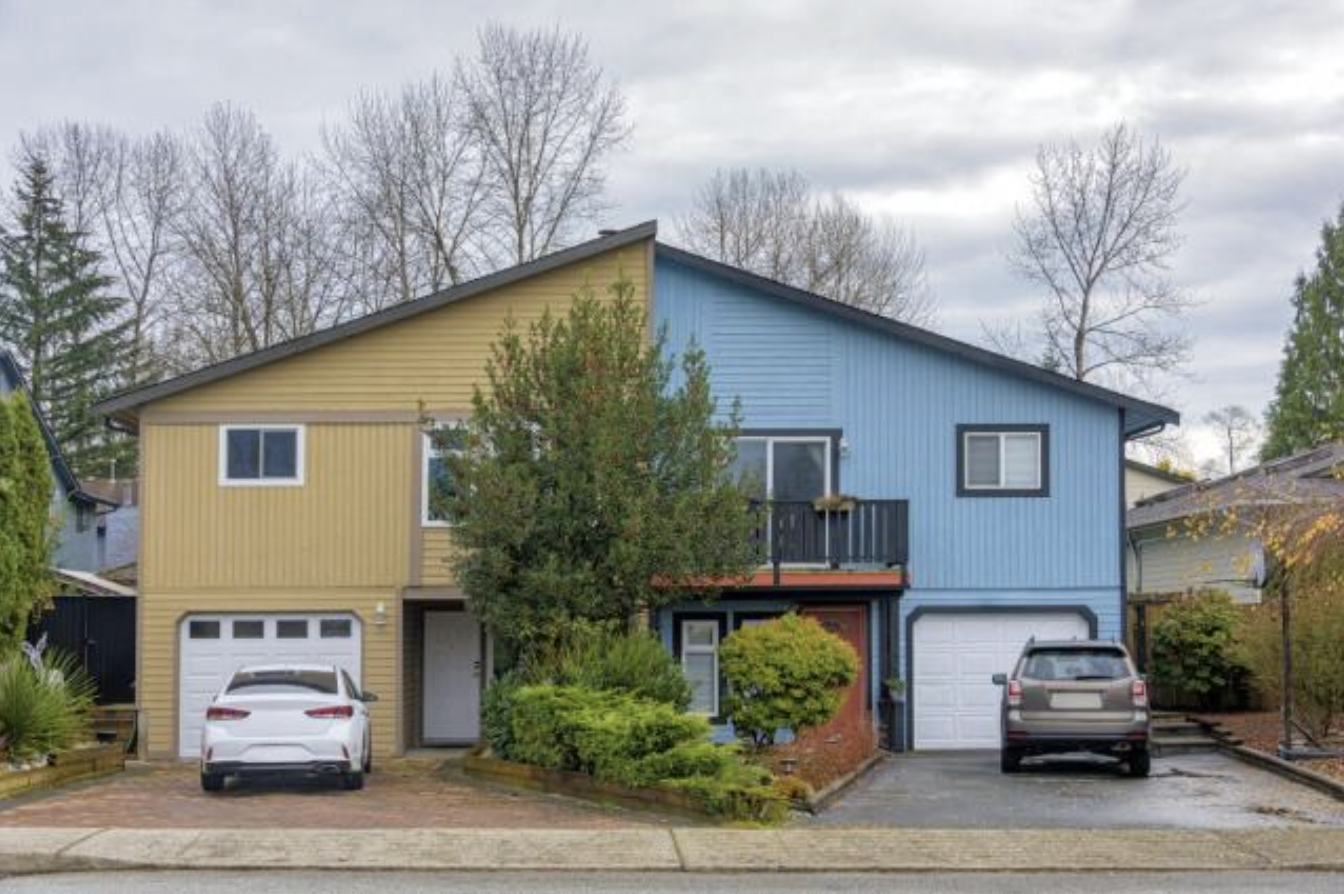
A Real Estate Strategy for Aspiring Farmers Who Want to Farm on Their Own Terms
Let’s talk about something that is no secret in small scale farming circles: most people who want to farm can't afford to buy the land they need to do it right. Not without decades of saving, a family inheritance, or taking on debt levels that would keep anyone up at night.
For example, a viable small farm operation might need 5-20 acres with water rights, a home and ideally outbuildings in place (barn for animals, walk in cooler, fencing, etc). If you look at available properties that fit this bill around the state, you're likely going to find a budget range of $700,000 to $1.5 million+ (depending on location), and that’s just the land purchase – before you've bought a single tractor or seed.
But here's what almost no one in the farming community is talking about: maybe you don't have to buy the farmland first.
What if you built the financial foundation first — using real estate investing — so that when you do buy your farm, you can actually afford the land you really want, in the location you really need, with the infrastructure you require, already in place?
That's the strategy I want to walk you through in this blog post. And it starts with a duplex.
The Problem: Farmland Is Out of Reach — And Cheap Land Can Be a Trap
It's tempting to think the solution to expensive farmland is finding cheaper land. And sure, you can find acreage in certain rural markets that has an approachable price tag of under $500k. But cheap land usually means one or more of the following:
Poor soil quality
No water access or infrastructure
Remote location that makes market access difficult
or land that lacks the fencing, barns, and outbuildings a functioning farm needs
Buying cheap land often means you spend years and significant money trying to make a marginal property work — rather than having the resources to farm the right property well from the start. It's not really a bargain.
Meanwhile, the USDA reports that 85% of farm households receive more than half of their income from off-farm sources — and 51% of farm households have negative income from farming in a given year. The traditional solution to this problem is having a spouse with a W2 job. One person farms; the other punches the clock to keep the lights on.
But what if instead of a 9-5 job, that "off-farm income" came from rental properties you own? What if the income your household needed to survive didn't require trading hours for dollars — but instead came from an asset that builds wealth over time, even while you sleep?
That's the reframe this strategy is built on.
Real Estate Investing 101, For People Who've Never Even Thought About It
If you've never explored real estate investing, the concept can feel intimidating — like it's something only wealthy people or finance types do. Well, it's not. At its core, real estate investing is simple: you buy a property, someone else pays you to use it, and over time that property increases in value.
Here are a few foundational concepts worth knowing about Real Estate Investing:
Cash Flow
Cash flow is the money left over each month after all your expenses are paid — mortgage, taxes, insurance, maintenance, vacancy. If your rental income exceeds those costs, you have positive cash flow. That's money in your pocket every month. In today's market (more on this in a moment), full positive cash flow from a single rental unit is harder to achieve than it was a few years ago — but significantly reducing your housing expenses is still very much achievable and highly valuable.
Equity
Equity is the portion of a property's value that you actually own — the difference between what the property is worth and what you owe on it. Equity grows in two ways: your mortgage balance goes down as you make payments (principal paydown), and the property's market value goes up over time (appreciation). Think of equity as a savings account that builds itself. You can eventually access it through a refinance or by selling the property — and use it to fund your next move.
Appreciation
Farmland has appreciated at roughly 4–6% per year in recent years nationwide. Residential real estate in many markets has followed a similar trajectory. Over 5–10 years, that appreciation compounds meaningfully — and the equity from that growth is real money you can use.
Leverage
Leverage means using borrowed money to control a larger asset than you could afford outright. When you put 3.5–5% down on a $350,000 property, you're controlling a $350,000 asset with $12,000–$17,500 of your own money. When that property appreciates, you gain on the full $350,000 — not just your down payment. That's the power of leverage in real estate, and it's why even modest properties can generate serious wealth over time.
Depreciation & Tax Benefits
When you own rental property, the IRS allows you to deduct depreciation — a non-cash expense — against your rental income. You can also deduct mortgage interest, property taxes, insurance, repairs, and property management costs. This often means your rental income is taxed at a lower effective rate than ordinary income from a W2 job, or sometimes not taxed at all in a given year. Consult a CPA, but the tax advantages of rental property ownership are real and significant.
In short: real estate investing isn't about getting rich quick. It's about putting your money to work building wealth quietly in the background — while you focus on what you actually love doing.
What Is House Hacking?
House hacking is a specific real estate strategy where you buy a multi-unit property, live in one unit, and rent out the other unit(s). The rent you collect from your tenants offsets — or in some cases fully covers — your mortgage and housing costs.
The classic setup: you buy a duplex. You live in one side. A tenant lives in the other side and pays you rent. Their rent reduces your monthly housing expense, often by 40–60%. Instead of paying $2,000/month to live somewhere, maybe you're paying $800–$1,200. That difference is money you can now save, invest, or put toward your farming operation.
After you've lived in the property for a period of time (typically one year is required for owner-occupant loan programs), you can move out, rent both units, and the property becomes a pure investment — generating rental income every month while you've moved on to your farm.
House hacking is one of the most accessible entry points into real estate investing because owner-occupied financing offers the most favorable loan terms available: lower down payments, lower interest rates, and more flexible qualification criteria than investment property loans.
The Strategy: Buy a Duplex, Build Your Runway, Then Buy Your Farm
Here's how this plays out in practice for an aspiring farmer:
Phase 1: Buy the Duplex (Year 0–1)
You work with a lender to purchase a duplex in town — or in a small community near the agricultural area where you want to eventually farm. You use owner-occupant financing (more on loan options below), which allows you to get in with a relatively small down payment. You move into one side and rent the other.
The rental income from your tenant immediately reduces your housing expense. Instead of paying full rent or a full mortgage solo, you're now sharing that burden with a paying tenant. This frees up cash every single month.
Phase 2: Lease Farmland and Start Farming (Year 1–5)
Here's the key insight most aspiring farmers miss: you don't need to own farmland to start farming. Leasing is a completely legitimate and common path. The national average cash rent for cropland is around $160/acre. Even for higher-quality ground, you're looking at $200–$400/acre annually in most markets — compared to buying that same land outright for $5,000–$15,000/acre.
Leasing land lets you start building your farming operation, developing your practices and skills, establishing relationships with buyers and vendors, and proving out your business model — without tying up hundreds of thousands of dollars in a land purchase. You're farming. You're learning. And back in town, your duplex is quietly building equity.
Phase 3: Choose Your Exit (Year 5–7)
After several years, you'll have meaningful equity in your duplex from both principal paydown and appreciation. At that point, you have options:
Option A: Cash-Out Refinance + Keep the Duplex
You refinance your duplex to pull out the equity you've built — typically up to 75–80% of the property's current appraised value. You rent out your former unit (the one you were living in), so now both sides are generating income. You use the equity you pulled out as the down payment on your farm property. The duplex continues to generate rental income every month, helping offset the farm mortgage or funding your operation. You own both.
Option B: Sell the Duplex, Buy the Farm
You sell the duplex and use the proceeds — your original equity plus appreciation — as a large down payment on the farm property. This simplifies your balance sheet and may allow you to qualify for more farm financing. You give up the ongoing rental income, but you enter the farm with significant capital and a lower debt load.
Option C: The Compounding Play (Keep Building First)
This is the longer game — and potentially the most powerful. After moving out of the duplex and renting both units, you use a cash-out refinance not to buy the farm immediately, but to put a down payment on a second rental property — another small duplex or single-family rental. Now you have two income-producing properties. You repeat the process: let both properties build equity, let the rental income accumulate, and then — with two properties worth of equity and two income streams — you purchase your farm from a position of real financial strength. This takes longer, but it means you farm without financial pressure from day one.
The duplex isn't a detour from your farming dream. It's the foundation that makes your farming dream financially sustainable.
Important Note on Cash Flow
In today's market — with rates in the 6–7% range and property prices still elevated — full mortgage offset from a single rental unit is achievable in some markets but not universal. The realistic expectation is a 40–55% reduction in your housing costs, not living for free. Budget for a vacancy allowance (5–8%), maintenance reserves (set aside roughly 1% of property value annually), and occasional repairs. These are real costs that need to be factored in.
The strategy still works powerfully — your net housing cost drops dramatically, and you're building equity simultaneously. Just go in with realistic expectations.
What Does Day-to-Day Life Look Like?
Let's be real about what this life actually looks like during the duplex phase.
You own a property, so you're a landlord. That means screening tenants, signing leases, responding to maintenance calls, and occasionally dealing with the headaches that come with having another person living next door. If you're not cut out for that, this strategy isn't for you. But if you're willing to put in the work — and most farmers already understand hard work — managing one rental unit is very manageable, especially when you're living on-site.
You're also farming during this period — leasing land and running your operation — which means you may have full days between farm work and tenant management. It's not passive. But the payoff is that you're not financially desperate. Your housing costs are dramatically reduced. You have cash flow buffer. You're building something.
The mental health and decision-making benefits of not farming from a place of financial desperation cannot be overstated. The USDA data shows that 69% of small farms operate with profit margins thin enough to be classified as "high risk." Most small farmers are one bad season from financial crisis. Having rental income as a floor beneath you changes the entire psychology of farming. You can take risks. You can be patient. You can farm for passion — not just survival.
Financing Options for First-Time Buyer-Investors
Here's the good news: the financing landscape for owner-occupied multi-unit properties is genuinely favorable for first-time buyers. These are not investor loans — they're homeowner loans, which come with better terms.
FHA Loan (3.5% Down)
FHA loans are backed by the Federal Housing Administration and allow as little as 3.5% down on properties with up to 4 units, as long as you live in one of them. Credit score minimums are accessible (typically 580+ for 3.5% down). The catch: you pay mortgage insurance premiums (MIP) for the life of the loan unless you refinance. Still, for someone with limited savings, this is the most accessible entry point.Conventional Loan with 5% Down (Fannie Mae / Freddie Mac)
Fannie Mae and Freddie Mac updated their guidelines to allow 5% down on owner-occupied 2–4 unit properties. This is a significant improvement from the previous 15–25% requirements for multi-unit investment properties. You'll pay PMI until you reach 20% equity, but PMI can be cancelled — unlike FHA MIP. For buyers with solid credit, this can be a better long-term option than FHA.VA Loan (0% Down for Veterans)
If you're a veteran or active-duty military, VA loans offer zero-down financing on owner-occupied properties with up to 4 units. No PMI. Competitive rates. This is arguably the single best financing tool available for house hacking if you qualify.USDA Rural Development Loans
Worth mentioning for the farming audience specifically: USDA Rural Development loans offer 0% down for single-family homes in eligible rural areas. These are for primary residences only — not multi-unit — but if a duplex isn't available in your target area, a single-family home with a detached ADU (accessory dwelling unit) or a large home where you can rent rooms may still produce meaningful rental income with very little down.
Beyond the Duplex: Other Property Types to Consider
While the duplex is the classic house hack, it's not the only option:
Single family home with ADU: A main house plus a guest cottage or converted garage can generate rental income while giving you more private living space.
Triplex or Fourplex: More units means more rental income and better odds of full mortgage offset. Financing works the same as duplexes for owner-occupants. More management, but better numbers.
Single family with rentable rooms: In college towns or areas with housing shortages, renting spare bedrooms can meaningfully offset a mortgage — though you're sharing living space.
House on acreage near town: In some rural markets, you can find a property close enough to town for rental demand but on enough land to start small scale farming immediately. These hybrid properties can be ideal if you find the right one.
What If Farming Could Be for Passion — and Passion Only?
Here's the deeper vision behind this strategy.
Farming is, for most people who do it, a calling. It's not a rational financial decision. You farm because you're built for it — because there's something about working land and raising animals and growing food that nothing else replaces.
But right now, most small farmers are farming under a constant cloud of financial pressure. They need the farm to work — to generate enough income to pay the mortgage, feed their family, keep the equipment running. That pressure changes the decisions you make. It forces short-term thinking. It means you can't take the risk on a new enterprise or a new market because you can't afford to fail.
What this strategy offers is a different relationship with money and farming. If your basic living costs are covered — or substantially offset — by rental income from properties you own, then the farm doesn't have to carry the whole financial load. You can farm smaller and more intentionally. You can experiment. You can specialize in something you genuinely love producing, even if the margins are thin.
You can farm because you love it.
85% of farm households already depend on off-farm income to survive. The question isn't whether you'll need outside income — it's whether that income will drain your time, or build your wealth.
How I Can Help You Get Started
This strategy requires coordination between two worlds: real estate investing and agriculture. Most lenders don't understand farming. Most farm advisors don't understand real estate investing. That's where I come in.
I work with aspiring farmers who want to use real estate as a stepping stone to farm ownership — helping you:
Understand your financing options and find lenders who work with first-time buyer-investors
Identify the right type of property to house hack in your target area
Run the numbers on specific deals so you know what you're getting into before you sign anything
Build a timeline and roadmap from duplex purchase to farm acquisition
Connect the dots between your farming goals and your real estate strategy
If you're serious about farming but not sure how to get there financially, let's talk. The path exists. It just looks a little different than most people expect.
Makensy Venneri | Greenthumb Properties
A Note on the Numbers
All figures in this post are illustrative based on national averages and publicly available USDA data as of 2025. Real estate markets vary significantly by location. Past appreciation does not guarantee future results. This post is for educational purposes and does not constitute financial, legal, or investment advice. Work with a licensed lender, real estate professional, and CPA before making any purchasing decisions.